

Bringing Global Shoulder Surgery Insights Back to Sydney
Modern shoulder surgery continues to evolve rapidly. New technologies, refined surgical techniques, better implants, and more sophisticated arthroscopic methods are all helping surgeons improve precision, recovery, and outcomes for patients. One of the most important parts of my role as a shoulder and elbow surgeon is to keep learning, keep refining, and keep bringing the best of that progress into everyday patient care.

Recently, I had the privilege of visiting Dr Justin Griffin in Virginia Beach, where I was able to observe, discuss cases, and exchange ideas with a highly respected colleague in shoulder surgery. Time spent with expert surgeons in the operating theatre is always valuable. It allows for practical discussion about technique, judgement, surgical planning, and the small details that can make a meaningful difference in patient outcomes.
I also travelled to the Arthrex facility in Naples, Florida, to participate in the Comprehensive Shoulder Arthroplasty meeting and The Cowboy’s Way Advanced Shoulder Arthroscopy meeting. These programs brought together experienced shoulder surgeons focused on the latest developments in both shoulder replacement and arthroscopic surgery.

What makes meetings like these worthwhile is not simply hearing about new ideas. It is the opportunity to critically assess what is genuinely useful, what is supported by evidence and experience, and what can be translated into safe, effective, modern care for patients at home.
For patients, this matters.
Shoulder conditions can significantly affect quality of life. Pain, weakness, stiffness, instability, arthritis, and loss of function can interfere with sleep, work, sport, and everyday activities. Whether the solution is non-operative treatment or surgery, patients deserve care that is thoughtful, current, and technically precise.
In shoulder replacement surgery, advances continue in areas such as preoperative planning, implant design, component positioning, fixation strategies, and methods to better restore function in complex arthritis or rotator cuff-related conditions. These developments help surgeons plan more accurately and perform surgery with greater confidence and consistency.
In shoulder arthroscopy, progress continues in instability surgery, rotator cuff repair, tendon procedures, biological augmentation strategies, and techniques aimed at improving visualisation, fixation, and tissue management. Although technology alone is never the answer, well-chosen modern techniques can improve the ability to tailor surgery to the individual patient and their specific pathology.
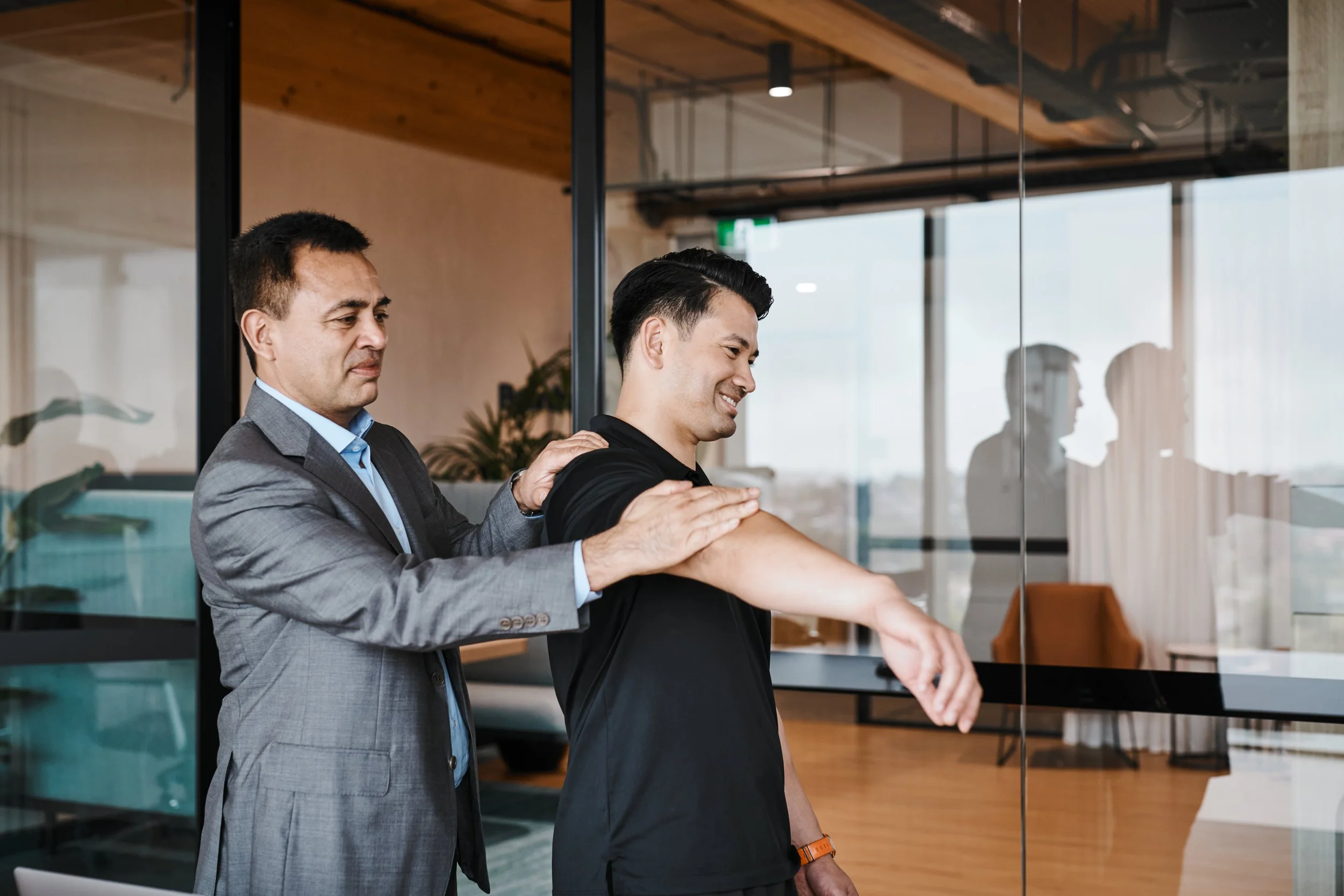
My goal is always the same: to combine sound judgement, careful indication for surgery, refined surgical execution, and structured rehabilitation in order to give patients the best possible opportunity for a good result.
Education and travel of this kind are not about chasing trends. They are about maintaining high standards. They are about learning from leaders in the field, examining new ideas critically, and ensuring that my patients in Sydney have access to contemporary, evidence-informed shoulder care.
Medicine should never stand still. Surgeons should not stand still either.
I remain committed to ongoing improvement in shoulder and elbow surgery, and to bringing the benefits of that learning directly to my patients — with the aim of improving pain, restoring function, and achieving the best outcomes possible.
If you are struggling with shoulder pain, weakness, stiffness, instability, or arthritis, and would like an expert opinion on your options, my rooms would be pleased to assist.
